From the quiet pages of A.A. Milne's cherished books to a global phenomenon worth billions, Winnie the Pooh's cultural impact and legacy is a sprawling tale that began not in an English forest, but with a real-life bear from Canada. It’s a journey that traces from a small Canadian town to the battlefields of World War I, across the Atlantic to the London Zoo, and eventually into the hearts and homes of generations worldwide, touching everything from philosophy to international politics.
At a Glance: The Enduring Journey of Winnie the Pooh
- A Canadian Beginning: Winnie the Pooh's namesake was a real black bear cub purchased by a Canadian soldier, Harry Colebourn, in White River, Ontario, in 1914.
- Literary Inspiration: The gentle bear, Winnie, became a beloved attraction at the London Zoo, captivating young Christopher Robin Milne and inspiring his father, A.A. Milne, to create the iconic stories.
- Global Phenomenon: Walt Disney's adaptation in 1961 catapulted Pooh to unparalleled international fame and merchandising success.
- Timeless Wisdom: Beyond entertainment, Pooh and his friends offer simple, profound lessons on friendship, innocence, and life, explored in philosophical texts and games like Poohsticks.
- Modern Challenges: The character has faced unexpected censorship in China due to political memes, highlighting his unintended role in contemporary global affairs.
- Enduring Legacy: Now partly in the public domain in the US, Pooh remains a symbol of childhood wonder, gentle wisdom, and cross-cultural connection.
The Unexpected Origins: A Bear Named Winnie from Winnipeg
Before he was the "Bear of Very Little Brain" from the Hundred Acre Wood, Winnie the Pooh was, in fact, a real, full-grown female black bear from Canada. This surprising truth is the foundation of his extraordinary journey and a testament to his deeply cross-cultural roots.
It all began in August 1914, just as the drums of World War I were beginning to beat across the globe. Harry D. Colebourn, a British-born veterinarian who had emigrated to Winnipeg, Manitoba, was en route to join the Canadian Army Veterinary Corps. During a stopover in White River, Ontario, Colebourn encountered a hunter with an orphaned black bear cub. For a mere $20 (a significant sum over $400 today), he bought the cub, naming her "Winnipeg"—soon shortened to "Winnie"—after his adopted Canadian hometown.
Winnie quickly became the unofficial mascot of Colebourn's Second Canadian Infantry Brigade. She crossed the Atlantic with the soldiers, a comforting presence amidst the grim preparations for war. However, a war zone was no place for a bear, even one as gentle as Winnie. So, on December 9, 1914, Colebourn made the difficult decision to leave Winnie at the London Zoo for safekeeping, intending to retrieve her after the conflict.
Winnie, with her unusually placid nature, became an instant star at the zoo. Children were allowed to feed her and even ride on her back—a testament to her extraordinary gentleness. Colebourn visited her whenever he could, and after the war, recognizing her immense popularity and the safe haven she had found, he decided she should remain at the London Zoo permanently. This act of kindness and foresight set the stage for an encounter that would change literary history forever.
From Real-Life Bear to Literary Icon: A.A. Milne's Inspiration
Winnie's fame at the London Zoo soon reached the ears of A.A. Milne and his young son, Christopher Robin Milne. The boy was captivated by Winnie, forming a deep attachment during their regular visits. So profound was this connection that Christopher Robin renamed his own beloved teddy bear "Winnie" after the real bear, later adding "Pooh" (the name of a swan he had once known).
Inspired by his son's imaginative play with his toys, and of course, the gentle bear at the zoo, A.A. Milne began to weave stories. The first collection, "Winnie-the-Pooh," debuted in 1926, followed by "The House at Pooh Corner" in 1928. While other characters like Piglet, Eeyore, Tigger, Kanga, and Roo were based on Christopher Robin's other stuffed animals, the very foundation of the iconic "Bear of Very Little Brain" was Canadian, both in name and spirit. Milne himself acknowledged the real Winnie and his son's zoo visits in the introduction to his first book, cementing the connection.
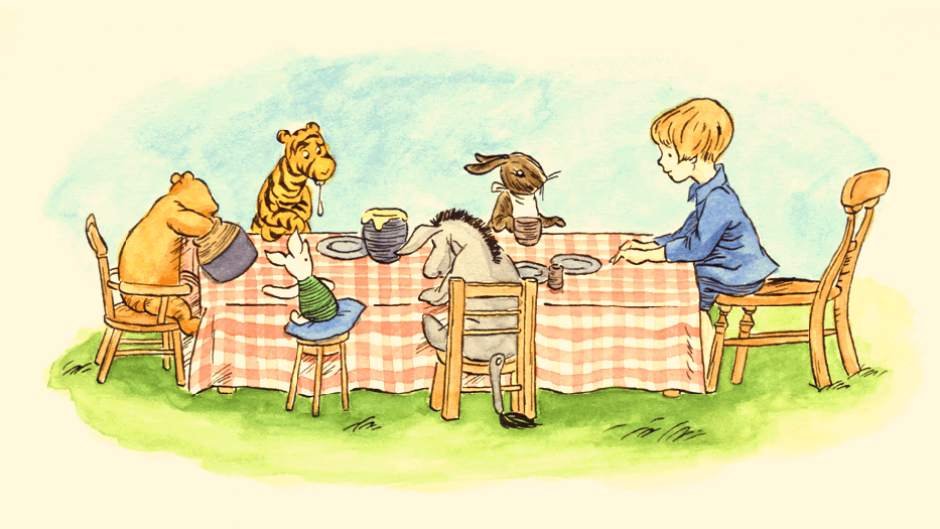
The enchanting illustrations that brought Pooh and his friends to life were the work of E.H. Shepard. Interestingly, Shepard didn't base his illustrations on Christopher Robin's actual teddy bear, but rather on his own son's teddy, Growler. Nonetheless, Shepard's distinct style, depicting the Hundred Acre Wood (inspired by Ashdown Forest in East Sussex, England, where Milne had a country home), became synonymous with the Pooh universe. Many of the story's locations, including the famed Pooh Bridge where the game of Poohsticks originated, correspond to real places in the forest. If you're curious about the setting, you can Explore the 100 Acre Wood and imagine yourself alongside Pooh and his friends.
In Milne's books, Pooh is characterized by his naive innocence, gentle demeanor, and unwavering loyalty. He's often slow-witted but possesses a surprising wisdom, a talent for poetry, and an insatiable love for honey. These enduring traits have made him a beloved figure, offering simple, profound lessons that resonate across generations.
Canada's Enduring Embrace of Its Furred Hero
Canada has never forgotten its pivotal role in the Winnie the Pooh story. The country proudly celebrates its connection, ensuring that Winnie's true origins are widely recognized and honored.
White River, Ontario, the very place where Harry Colebourn bought the cub, hosts an annual Winnie's Hometown Festival every third weekend of August. The town boasts a prominent statue of Winnie and a Heritage Museum dedicated to both Colebourn and his famous bear. Similarly, Winnipeg, Manitoba, pays homage to the bear's namesake with a magnificent bronze statue of Harry Colebourn and Winnie in Assiniboine Park, alongside a dedicated Pooh Gallery that delves into their shared history. Even the London Zoo continues to honor Colebourn and Winnie with statues and plaques.
The Canadian connection extends deeply into the literary legacy as well. McClelland and Stewart of Toronto published the first Canadian edition of "Winnie-the-Pooh" in 1925, a year before the UK editions. This made the book available in both English and French, demonstrating Canada's early appreciation and dissemination of the stories. Crucial archival materials, including Colebourn's war diaries and photographs documenting Winnie's journey, are carefully preserved at institutions like Toronto Metropolitan University, the White River Heritage Museum, and the Assiniboine Park Conservancy.
The story of Winnie's Canadian roots is a fixture in Canadian media, with the CBC frequently featuring programming on her origins. Modern adaptations, such as the 2004 drama "A Bear Named Winnie," further cement this narrative. Perhaps most notably, Lindsay Mattick, Colebourn's great-granddaughter, penned the Caldecott Medal-winning children's book "Finding Winnie: The True Story of the World’s Most Famous Bear," ensuring that Winnie's unique Canadian genesis continues to captivate young readers worldwide.
The Disneyfication: A New Era of Global Reach and Commercial Success
While Milne's books established Winnie-the-Pooh as a literary treasure, it was The Walt Disney Company that propelled him into the stratospheric realm of global pop culture. In 1961, Disney acquired film and other rights, beginning a highly successful adaptation of the stories. Notably, Disney opted for the unhyphenated name "Winnie the Pooh," a subtle shift that marked the beginning of a distinct new chapter for the character.
Even before Disney, an American entrepreneur named Stephen Slesinger played a crucial role in Pooh's merchandising future. In 1930, Slesinger acquired US and Canadian merchandising rights. He quickly began developing early merchandise, and it was his vision that first depicted Pooh in his familiar red shirt by 1932. This iconic look would later be adopted and popularized by Disney, becoming synonymous with the character for generations of fans.
Under Disney's stewardship, Winnie the Pooh transformed into one of the most recognizable and commercially successful franchises in history. Animated shorts, feature films, television series, and an endless array of merchandise solidified Pooh's place as a global icon. He quickly became a cornerstone of Disney's empire, demonstrating astonishing merchandising value. Forbes notably ranked Pooh as the most valuable fictional character in both 2002 and 2005, a testament to his enduring appeal and immense commercial power. His widespread recognition was further cemented with a star on the Hollywood Walk of Fame in 2006.
Winnie's Deep Dive into Philosophy and Play
Beyond the charming tales and commercial success, Winnie the Pooh has also burrowed his way into the realms of philosophy, psychology, and even real-world games. His simple, unpretentious wisdom has resonated with adults seeking a respite from the complexities of modern life.
Perhaps the most famous example is Benjamin Hoff's "The Tao of Pooh" (1982) and its sequel, "The Te of Piglet." These books use the characters and their adventures in the Hundred Acre Wood to explain complex Taoist principles in an accessible, delightful manner. Pooh's inherent simplicity, contentment, and "un-carved block" nature perfectly illustrate concepts like living in the moment, finding happiness in small things, and the wisdom of "doing nothing." Piglet, with his gentle anxieties, offers insights into courage and compassion. These philosophical explorations underscore the depth of Milne's creation, proving that a "bear of very little brain" can offer profound lessons.
Moreover, the stories have inspired real-life traditions and games. The game of Poohsticks, invented by Pooh in "The House at Pooh Corner," involves dropping sticks into a river from one side of a bridge and rushing to the other side to see whose stick emerges first. This seemingly simple game has become a cherished pastime, leading to annual World Poohsticks Championships held in England, attracting participants from across the globe. It's a charming example of how the literary world can spill over into tangible, joyful experiences.
These facets of Pooh's legacy—his philosophical interpretations and the tangible game of Poohsticks—demonstrate that his impact far transcends mere entertainment. He embodies timeless values of friendship, innocence, mindfulness, and the quiet joy found in the everyday.
The Public Domain and Its Ramifications
The landscape of Winnie the Pooh's legal rights has recently undergone a significant transformation, opening new avenues for creative interpretation. The US copyright for the original Winnie-the-Pooh character (as he appeared in Milne's books) expired on January 1, 2022, meaning he officially entered the public domain in the United States. This allows creators to use and adapt the original Pooh character without needing permission or paying royalties, leading to a surge of new, sometimes unconventional, interpretations. It's important to note, however, that the Disney version of Pooh (with his red shirt and specific visual style) remains protected under separate Disney copyrights. The UK copyright for the original character will follow suit, expiring on January 1, 2027.
The entry into the public domain has already yielded fascinating, and sometimes startling, results. Creators are now free to reimagine Pooh in ways that diverge wildly from his traditional wholesome image. For instance, the horror film "Winnie-the-Pooh: Blood and Honey" quickly emerged, depicting a slasher version of Pooh and Piglet, highlighting the unbridled creativity (and controversy) that the public domain can unleash.
This shift presents both opportunities and challenges. On one hand, it fosters innovation, allowing new artists to introduce Pooh to contemporary audiences in fresh ways, potentially ensuring his continued relevance. On the other, it can dilute the familiar image of the beloved bear, leading to interpretations that may clash with the gentle spirit of Milne's original creation. For consumers, it means a wider, more varied array of Pooh-inspired content, necessitating a discerning eye to distinguish between the various iterations.
Navigating Modernity: From Censorship to Political Symbolism
In a surprising twist for a character so intrinsically linked with innocence and childhood, Winnie the Pooh has found himself at the center of international political controversy, particularly in China. Since mid-2017, images of Winnie-the-Pooh have been heavily censored on social media platforms in China. This extraordinary measure stems from a series of viral memes comparing Chinese leader Xi Jinping to the corpulent, affable bear.
What began as lighthearted online jest quickly escalated into a serious issue for the Chinese government, which views such comparisons as a challenge to authority and an insult to the national leader. The censorship has had tangible consequences: films featuring the character, such as Disney's 2018 live-action "Christopher Robin," have been denied release in China. Furthermore, Pooh's name and image have been censored in video games and various media. This even led to an episode of the animated satirical series "South Park" depicting Pooh's demise, which in turn resulted in the show's complete ban in China.
This situation highlights the unexpected ways in which popular cultural figures can become symbols in geopolitical narratives. Winnie the Pooh, originally a symbol of comfort and imagination, has inadvertently become a figure of political dissent and censorship. Conversely, in Taiwan, military morale patches have been created featuring a Formosan black bear punching Winnie-the-Pooh, further illustrating how the character has become a stand-in for broader political tensions.
These modern challenges underscore Pooh's profound global reach. He is no longer just a character in a book or a cartoon; he is a recognizable entity whose image carries weight and meaning far beyond the Hundred Acre Wood, capable of inspiring both delight and diplomatic incident.
The Enduring Resonance of a Very Special Bear
From a real bear rescued in rural Ontario by a compassionate soldier to a globally recognized literary and commercial juggernaut, Winnie the Pooh's cultural impact and legacy is a rich tapestry woven with threads of history, literature, commerce, and even international politics. He is a testament to the power of a simple, well-told story and the enduring appeal of pure-hearted characters.
Winnie the Pooh reminds us of the value of friendship, the wisdom of simplicity, and the boundless potential of a child's imagination. Whether encountered through Milne's timeless prose, Disney's vibrant animations, or even philosophical interpretations, Pooh continues to offer a gentle solace and a comforting presence in an often-complicated world. His journey, beginning in Canada and touching every corner of the globe, ensures that the "Bear of Very Little Brain" remains one of the most beloved and influential figures in human culture, a gentle giant whose quiet wisdom continues to resonate with us all.